Odysse
Odysse Hawk specifications and features
Every figure from the manufacturer's sheet, plus what each feature actually does for you.
The numbers in context
Each figure read against the 88 electric scooters we have reviewed.
The figures below are the manufacturer's. To make them mean something, each is read against the 88 electric scooters we have reviewed: the class average is the number to beat, and the rank shows how far the Hawk is from the ends of the field.
The 1.9 kW motor is 3.1 kW below the class average of 5 kW, 54th of 76. Battery of 1.4 kWh is 1.3 kWh below the class average of 2.7 kWh, 72nd of 88. Certified range of 85 km is 37 km below the class average of 122 km, 70th of 88.
Charging time is 3.5 hours, 1.4 hours below the class average of 4.9 hours, 11th of 81. Quick enough to top up over a lunch break. Top speed is 45 km/h, 22 km/h below the class average of 67 km/h, 69th of 88. Kerb weight is 128 kg, 21 kg above the class average of 107 kg, 56th of 68. Expect that mass to show in traffic and when paddling it backwards, though it also helps stability at speed.
Seat height is 830 mm, the tallest of the 57 we have data for. Riders under 5'7" should sit on one before signing; you may be on tiptoe at signals.
Full specification sheet
Engine
- Torque
- 44 Nm
- Transmission
- Automatic
Dimensions
- Kerb weight
- 128 kg
- Seat height
- 830 mm
- Ground clearance
- 175 mm
- Wheelbase
- 1380 mm
- Length
- 1900 mm
- Width
- 730 mm
- Height
- 1130 mm
Tyres
- Front tyre
- 100/80-12
- Rear tyre
- 120/70-12
Electric
- Peak motor power
- 1.9 kW
- Battery
- 1.4 kWh
- Claimed range
- 85 km
- Charging time
- 3.5 hrs
- Top speed
- 45 km/h
Brakes & suspension
- Front brake
- Disc, 2 piston caliper
- Rear brake
- Drum, 130 mm
- ABS / CBS
- Standard
- Front suspension
- Telescopic
- Rear suspension
- Both Side Spring Loaded Hydraulic
Source: Odysse official specifications. Figures can differ between variants; the table shows the range offered.
Dimensions in practice
The Hawk weighs 128 kg with fluids, has an 830 mm seat, 175 mm of ground clearance, and rides on a 1380 mm wheelbase. That clearance is generous: speed breakers and broken roads will not trouble the underbody.
Tyres are 100/80-12 front and 120/70-12 rear, tubeless.
Features, and why each matters
Grouped by what they do for you. Underlined items link to a plain-English explainer.
Safety and braking
Front disc brake
Sheds heat and works when wet. Worth the small premium over a drum on any commuter.
Tubeless tyres
A puncture deflates slowly instead of instantly, and roadside repair takes ten minutes.
Hazard lamps
All four indicators flash; useful in fog and when stopped on a highway shoulder.
Chassis
Alloy wheels
Lighter than spoked wheels and they allow tubeless tyres.
Console and connectivity
Digital console
Trip meters, real-time mileage and a gear indicator. The analogue dial is disappearing.
Bluetooth connectivity
Call and message alerts on the console so the phone stays in your pocket.
Turn-by-turn navigation
Directions on the console via the phone app. Saves mounting a phone on the bars.
Ride modes
An Eco map for mileage and a Power map for overtakes, switched from the bars.
Lighting
LED daytime running lamp
Makes you visible to cars in daylight, when most two-wheeler collisions happen.
Convenience
USB charging port
Charges the phone on a long commute. Check whether it is Type-A or Type-C.
Keyless start
Start and lock with the fob in your pocket. Convenient, but replacement fobs are expensive.
Under-seat storage
Whether a full-face helmet fits is the question to ask at the showroom.
Engine kill switch
Switch the engine off from the right bar without reaching for the key.
Electric
Carry the pack upstairs to charge. Solves the no-plug-at-parking problem.
Cruise control
Holds a set speed on open roads. Mostly a highway feature.
Over-the-air updates
Software features and fixes arrive without a service visit.
Equipment against Racer, Konarc and Trot
Equipment present on at least one variant of each; check the variant table for trim-specific items.
Only the Hawk has
- Front disc brake
- Bluetooth connectivity
- Turn-by-turn navigation
- Keyless start
- Engine kill switch
Rivals have, it lacks
- Side-stand engine cut-off
- LED headlamp
- LED tail lamp
- Reverse mode
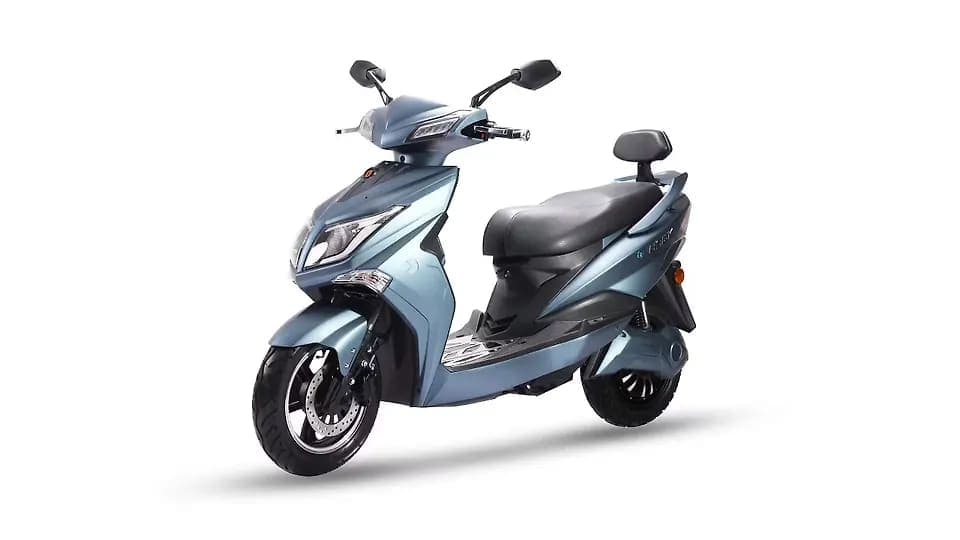
Colours
Hawk specs: questions people ask
- How long does the Hawk take to charge?
- About 3.5 hours for a full charge from a home socket.
- Is the Hawk suitable for short riders?
- It is on the tall side at 830 mm. Riders under 5'6" may be on tiptoe at stops and should try it before buying.
- Does the Hawk have ABS?
- No ABS or CBS is listed for this model.
- What features does the Hawk have?
- 16 items across 6 groups, including front disc brake, tubeless tyres, alloy wheels, hazard lamps and led daytime running lamp. Some are variant-specific.
Hawk from
₹99,400